Showing 145–156 of 226 results
-
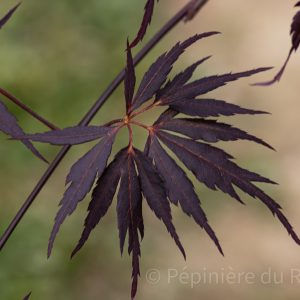
An upright Japanese maple with very deeply cut foliage, giving the illusion of a red “laceleaf”… but on a vertical silhouette. Spring starts bright red, summer darkens to a very deep red (sometimes almost black), then autumn returns with a vivid crimson finish.
-

‘Peve Starfish’ is a red Japanese maple with a rather upright, compact habit, remarkable for its deeply cut leaves whose lobes fold inward and curl downward, creating a very graphic “starfish” effect. The foliage starts bright red in spring, turns deep purple in summer, then transforms in autumn into a vivid crimson red. A rare cultivar, superb in a pot as well as in a small garden.
-
‘Phoenix’ is a very luminous Japanese maple, sought after for its bright pink spring flush streaked with yellow-green veins, creating a superb graphic effect. The colour then shifts towards yellow, then glossy green in summer, before a spectacular autumn display mixing orange, red and yellow. An ideal variety for containers or small gardens, best planted in gentle light to keep the foliage clean.
-
'Pink Ballerina' is a delicate masterpiece among Japanese Maples. This variegated laceleaf cultivar is celebrated for its striking pink splashes over a dark purple background. Its graceful weeping habit and compact size make it an exquisite choice for Zen gardens or container planting.
-
Pinus aristata (Bristlecone pine / Rocky Mountain bristlecone pine) is a characterful evergreen conifer, appreciated for its blue-green foliage, very slow growth, and a silhouette that often becomes irregular and sculptural over time. It is an excellent architectural subject for cold or continental climates, in full sun and well-drained soil, even poor soil. Once established, it is fairly drought tolerant.
-
Pinus contorta (lodgepole pine / contorted pine) is an evergreen conifer from western North America, known for its outstanding adaptability: depending on its origin, it can grow as a wind-beaten coastal shrub or a slender mountain tree. Its needles in pairs, good tolerance of poor, acidic soils, and cones that often persist on the branches make it an excellent choice for naturalistic gardens, free-draining sites, or mountain-style plantings in full sun.
-
Pinus ponderosa (ponderosa pine / “western yellow pine”) is a large evergreen pine with a very recognizable style: long needles gathered in tufts, sturdy cones, and above all a mature bark that turns orange to caramel-brown, broken into large plates. It thrives in full sun, in well-drained soil—even poor, stony ground. Once established, it becomes an excellent structural tree, suited to spacious gardens and mountain or naturalistic settings.
-
Pinus rigida (pitch pine) is a characterful North American pine, valued for its toughness and its ability to grow where many trees struggle: sandy, poor, acidic soils, sometimes dry. Its dark foliage—thick, stiff needles in bundles of three—and a silhouette that often becomes twisted with age make it an excellent architectural conifer, particularly suited to naturalistic gardens, free-draining ground, and exposed situations.
-
‘Puget Pink’ is a rare sycamore maple, prized for its exceptionally bright pink spring flush (“salmon / shrimp” tones). The foliage then shifts toward a chartreuse green and settles into a greener tone in summer. In autumn, it generally turns a clean yellow, often enhanced with orange. Its naturally rounded, stocky habit makes it an excellent small ornamental tree for the garden, best placed in a bright situation but without excessive heat.
-
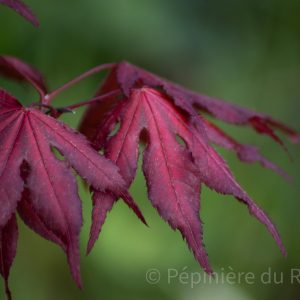
A Japanese maple with reticulated foliage (very dark veins) and lavender to purple spring tones, sometimes redder in brighter light. The venation remains readable all summer, even as the foliage shifts toward burgundy and then greener tones. Late in the season, colour often turns orange-red.
-
‘Purple Thunder’ is an Acer shirasawanum with a very distinctive character: its large purple leaves have lobes that curve downward, creating a unique, almost “sculptural” foliage silhouette. The color is especially intense on new growth, stays burgundy through summer, then finishes in a blazing red in autumn. An excellent choice to add contrast and an original texture in the garden or in a large container.
-
‘Red Dragon’ is a laceleaf Japanese maple (dissectum) with a compact, cascading habit, valued for its ability to keep a dark red colour for a very long time during the season. In spring, the foliage starts scarlet/bright red, then deepens to a rich burgundy in summer, before turning a blazing red in autumn. An excellent choice for a container or a small garden if you want a reliable red cascade.